
STRENGTHENING COLLABORATION FOR BIODIVERSITY CONSERVATION IN THAN SA – PHUONG HOANG NATURE RESERVE
- Center for Nature Conservation and Development
- Apr 9
- 2 min read
Nestled within the transboundary limestone corridor between China and Vietnam, Than Sa – Phuong Hoang Nature Reserve in Thai Nguyen province holds exceptional ecological value. The area supports a wide range of endemic, rare, and threatened species, alongside critical limestone ecosystems. Despite its importance, the reserve faces mounting challenges: its rugged karst terrain complicates patrolling and enforcement, while illegal hunting and resource extraction remain persistent risks. These pressures are further intensified by the continued dependence of nearby communities on forest resources. In addition, gaps in technical capacity, standardized monitoring systems, and suitable tools continue to limit biodiversity monitoring in line with international standards, highlighting the need for stronger coordination mechanisms among stakeholders.

To address these challenges, in early April, the Management Board of protection and special-use forests of Thai Nguyen held a working session with Center for Nature Conservation and Development (CCD). The meeting aimed to reinforce collaboration and improve the effectiveness of forest protection, management, and biodiversity conservation efforts within the Reserve.

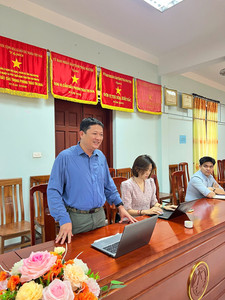


From left to right
Figure 1: Dr. Nguyen Manh Ha, Director of CCD, presented relevant solutions and models to enhance the effectiveness of biodiversity conservation at the Than Sa - Phuong Hoang Nature Reserve.
Figure 2: Mr. Nguyen Van Tuyen, Director of the Management Board of Special-use and Protection Forests of Thai Nguyen Province, shared insights on conservation efforts at the Than Sa - Phuong Hoang Nature Reserve.
The discussion provided an opportunity for the Management Board to present updates on forest conditions, as well as ongoing efforts to safeguard endangered and rare species. They also shared practical experiences in linking conservation initiatives with sustainable livelihood models for local communities. In response, CCD introduced its portfolio of conservation programs implemented across Vietnam, with a focus on innovative approaches such as technology-enabled biodiversity monitoring, improved data systems, and community-based conservation practices. The exchange laid important groundwork for future collaboration and more coordinated conservation actions in the province.
Over the past few years, CCD has actively piloted community-based conservation models across key limestone landscapes, including Huong Son Special-use Forest (Hanoi), Kim Bang Protection Forest, and Lac Thuy Protection Forest. These initiatives have delivered multiple benefits: improving protection outcomes for target species, strengthening co-management arrangements among authorities and local stakeholders, and enhancing both forest governance capacity and livelihood opportunities for communities.


Comments